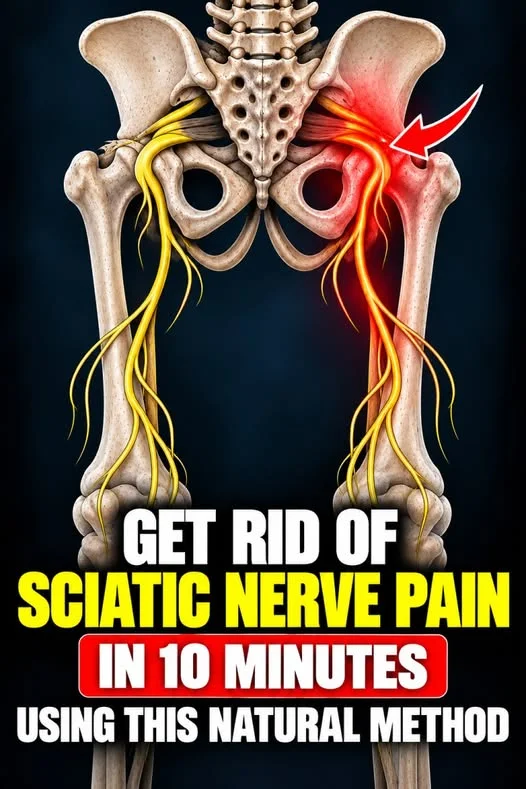
Sciatica can feel like much more than an ordinary sore back. The discomfort may begin in the lower back or buttock and travel down one leg, sometimes causing burning, tingling, numbness, or an electric-like sensation.
For some people, even simple activities such as sitting, walking, getting out of bed, or sleeping comfortably can become difficult during a flare-up.
The encouraging news is that many uncomplicated cases improve gradually with conservative care. Gentle movement, carefully selected stretches, comfortable positioning, and avoiding long periods of inactivity may help reduce stiffness and make everyday movement easier.
However, sciatica is a symptom rather than a single disease, and different underlying causes may require different approaches. Any exercise that clearly increases radiating pain, numbness, weakness, or other neurological symptoms should be stopped.
What Is Sciatica?
The sciatic nerve is the largest nerve in the body. It is formed from nerve roots in the lower spine and travels through the buttock and down the leg.
Sciatica describes symptoms that occur when one or more of these nerve roots become irritated or compressed.
Possible causes include:
A herniated or bulging spinal disc
Spinal stenosis
Age-related changes in the spine
Irritation around the piriformis muscle
Other conditions affecting the lower spine or surrounding tissues
The exact source of symptoms cannot always be determined from pain patterns alone. Persistent or severe symptoms should therefore be evaluated by a qualified healthcare professional.
Common Symptoms of Sciatica
Sciatica commonly affects one side of the body, although symptoms can occasionally occur on both sides.
People may describe:
Lower-back discomfort
Buttock pain
Burning pain traveling down the leg
Tingling or pins-and-needles sensations
Numbness
Leg or foot weakness
Pain that becomes worse during prolonged sitting
The intensity varies considerably. Some people experience mild intermittent discomfort, while others develop symptoms that significantly interfere with movement and sleep.
Before Stretching: Know the Warning Signs
Most cases of back and leg pain are not emergencies. However, certain symptoms require prompt medical evaluation.
Seek urgent medical attention if back or leg pain is accompanied by:
New loss of bladder or bowel control
Numbness around the groin, genital area, or inner thighs
Rapidly worsening leg weakness
Severe symptoms affecting both legs
Major trauma or a serious fall
Fever together with significant back pain
People with a history of cancer, severe osteoporosis, immune suppression, recent significant infection, or unexplained weight loss should also discuss new persistent back pain with a healthcare professional.
Should You Stretch When You Have Sciatica?
Gentle movement may be helpful for some people, but stretching should never be aggressive.
A stretch should create mild muscular tension, not sharp, electrical, burning, or increasingly radiating pain.
If a particular movement sends pain farther down your leg or causes new numbness or weakness, stop and choose a more comfortable position.
The following stretches are general options that some people find comfortable. They are not appropriate for every cause of sciatica.
1. Seated Figure-4 Piriformis Stretch
May be useful for: Tightness around the buttock and outer hip.
Sit upright in a sturdy chair with both feet on the floor.
Place the ankle of one leg gently across the opposite thigh, creating a figure-4 shape.
Keep your spine comfortably tall and slowly hinge forward from the hips.
You may feel a gentle stretch through the buttock and outer hip.
Hold for approximately 20 to 30 seconds if comfortable, then return slowly to the starting position.
Repeat on the other side.
You may perform the movement two or three times per side as tolerated.
Do not force the knee downward or push through radiating nerve pain.
2. Single Knee-to-Chest Stretch
May be useful for: Gentle lower-back mobility and muscular relaxation.
Lie on your back on a comfortable but supportive surface.
Bend both knees.
Bring one knee slowly toward your chest and hold behind the thigh or over the shin.
Keep your shoulders relaxed.
Hold for approximately 20 to 30 seconds if the position feels comfortable.
Release slowly and repeat with the opposite leg.
Try two or three repetitions per side.
If bringing the knee toward the chest increases pain traveling down the leg, discontinue the stretch.
3. Gentle Seated Hamstring Stretch
May be useful for: Tightness through the back of the thigh.
Sit near the front of a stable chair.
Extend one leg in front of you with the heel resting on the floor.
Keep a small bend in the knee rather than locking it completely straight.
Keeping your back relatively neutral, hinge forward gently from your hips.
Stop when you feel a mild stretch through the back of the thigh.
Hold for around 15 to 30 seconds, then return to the starting position.
Repeat on the other side.
Do not aggressively pull your toes upward or force yourself toward your foot if doing so reproduces shooting pain.
4. Supported Child’s Pose
May be useful for: Relaxing the lower back and hips in people who find spinal flexion comfortable.
Kneel on a padded surface and gently sit your hips toward your heels.
Separate your knees slightly if that feels more comfortable.
Reach your hands forward and allow your torso to move toward the floor.
You can place pillows beneath your chest or rest your hands and forehead on a chair if reaching the floor is uncomfortable.
Breathe slowly and remain in the position for approximately 20 to 60 seconds if comfortable.
This position is not suitable for everyone. Stop if it increases leg pain, knee pain, numbness, or tingling.
5. Standing Hip Flexor Stretch
May be useful for: Tightness at the front of the hip after prolonged sitting.
Stand beside a wall, countertop, or sturdy chair for balance.
Step one foot backward.
Keep your torso upright and gently bend the front knee.
Shift your pelvis forward slightly until you notice a mild stretch at the front of the hip on the back-leg side.
Avoid excessively arching your lower back.
Hold for approximately 20 to 30 seconds and switch sides.
Repeat two or three times if comfortable.
The most useful stretch is not necessarily the deepest one—the goal is comfortable movement without increasing nerve symptoms.
6. Gentle Pelvic Tilt
A pelvic tilt is less of a traditional stretch and more of a controlled movement that can help some people become aware of how their lower back and pelvis move.
Lie on your back with your knees bent and feet resting on the floor.
Relax your shoulders.
Gently tighten your abdominal muscles and allow your lower back to flatten slightly toward the surface beneath you.
Hold briefly, then relax.
Move slowly through a comfortable range rather than forcing your back flat.
Repeat approximately 8 to 10 times if the movement feels comfortable.
7. Gentle Standing Backward Movement
Some people whose symptoms become worse with sitting or forward bending feel better with gentle backward movement.
Stand upright with your feet comfortably apart.
Place your hands on your hips or lower back.
Without forcing the movement, gently lean your upper body backward a small amount.
Return to neutral.
Repeat several times only if symptoms remain comfortable or improve.
If pain moves farther down the leg, stop.
8. Gentle Walking
Walking is not technically a stretch, but it can be one of the simplest ways to keep the body moving during a mild flare-up.
Start with a few minutes on a flat surface.
Avoid trying to walk through significant pain.
Several short walks may be easier than one long walk.
Gradually increase your activity as symptoms allow.
Why Complete Bed Rest Is Usually Not the Best Approach
When pain is severe, resting briefly may feel necessary. However, prolonged bed rest can contribute to stiffness, muscle deconditioning, and reduced confidence in movement.
Many people do better when they continue gentle daily activity within their comfort level.
This does not mean ignoring significant pain. Instead, the goal is to balance rest with safe, tolerable movement.
Change Positions Regularly
Remaining in one position for a long time can make symptoms more noticeable.
If you work at a desk, consider getting up periodically to walk or gently change position.
Some people find that alternating between sitting, standing, and walking throughout the day is more comfortable than staying in one posture for hours.
Adjust Your Sitting Position
A supportive chair may be more comfortable than a deep, soft sofa during a flare-up.
Try keeping both feet supported and avoid sitting with a wallet or other bulky object in a back pocket.
A small rolled towel or lumbar cushion may feel helpful for some people, although it should be removed if it increases symptoms.
Heat for Muscle Comfort
A warm pack may help relax tight muscles around the lower back, buttock, or hip.
Use comfortable warmth rather than intense heat.
Apply it for approximately 15 to 20 minutes at a time, with a layer of fabric between the heat source and your skin.
Never fall asleep on an electric heating pad, and avoid heat on areas with reduced sensation because burns may occur without being noticed.
What About Ice?
Some people prefer a cold pack during an acute flare-up, while others feel better with warmth.
If you use ice, wrap the cold pack rather than placing it directly against your skin.
Apply it for a short period and discontinue use if the area becomes painful, excessively numb, or irritated.
Neither heat nor ice treats the underlying cause of sciatica, but either may provide temporary comfort.
Sleeping With Sciatica
Finding a comfortable sleep position can be challenging during a flare-up.
People who sleep on their side may find it comfortable to place a pillow between the knees. This can help keep the hips and pelvis in a more neutral position.
If you sleep on your back, placing a pillow beneath the knees may reduce tension through the lower back for some people.
There is no universally correct sleeping position. Choose the position that produces the least discomfort and allows you to rest.
Should You Avoid Sleeping on Your Stomach?
Stomach sleeping can be uncomfortable for some people because it may increase rotation or extension through the lower spine.
However, the effect varies between individuals.
If you naturally sleep on your stomach and it does not worsen your symptoms, you do not necessarily need to force yourself into another position.
Be Careful With Aggressive Massage
Gentle massage around tight buttock or back muscles can feel relaxing, but nerve pain is not simply a tight muscle that needs to be forcefully released.
Deep pressure directly over painful areas may make symptoms worse.
If massage produces increased tingling, numbness, or shooting pain, stop.
Can Foam Rolling Help?
Foam rolling may help some muscular tightness, but aggressive rolling directly over painful areas is not necessary.
Avoid forceful pressure through the lower spine or directly along areas where nerve symptoms are intense.
When in doubt, a physical therapist can demonstrate safer techniques based on the suspected source of your symptoms.
Be Cautious With Exercise During a Flare-Up
You do not necessarily need to stop all exercise when sciatica appears.
However, temporarily reducing activities that clearly aggravate symptoms may be reasonable.
Heavy lifting, repetitive bending, high-impact exercise, or prolonged positions may need modification until symptoms settle.
Return gradually rather than immediately resuming maximum intensity.
Over-the-Counter Pain Medicines
Some people use nonprescription pain relievers during a sciatica flare-up.
However, medications such as ibuprofen and naproxen are not appropriate for everyone.
They may be unsuitable for people with certain kidney conditions, stomach ulcers, gastrointestinal bleeding risks, heart disease, uncontrolled blood pressure, or those taking certain medications.
Acetaminophen also has dosing limits and may not be suitable for everyone, particularly people with certain liver conditions.
Ask a healthcare professional or pharmacist which option, if any, is appropriate for you.
Do Supplements Such as Magnesium Help?
Supplements are frequently promoted online for nerve or muscle discomfort, but sciatica is usually related to irritation of spinal nerve roots rather than a simple mineral deficiency.
Taking magnesium or another supplement is therefore not a universal treatment for sciatica.
Supplements can also interact with medications or be inappropriate for people with certain health conditions.
Discuss regular supplement use with a healthcare professional if you have ongoing symptoms or take prescription medications.
Posture and Sciatica
There is no single perfect posture that prevents all back pain.
Instead of trying to hold yourself rigidly upright all day, focus on changing positions frequently and using positions that feel comfortable.
Movement variety is often more practical than attempting to maintain one supposedly ideal posture for hours.
When Lifting Objects
If you need to lift something during recovery, keep the object close to your body and avoid combining heavy lifting with sudden twisting.
Ask for assistance with heavy or awkward objects.
If lifting repeatedly aggravates symptoms, temporarily modify the activity and seek professional advice if the problem persists.
How Long Does Sciatica Usually Last?
Recovery varies widely depending on the underlying cause, severity, activity level, and overall health.
Some mild episodes improve within days, while others take several weeks or longer.
It is difficult to predict an exact recovery timeline for an individual based solely on symptoms.
The more important sign is the overall trend: symptoms should gradually become easier to manage rather than progressively worse.
When Should You See a Doctor?
Consider arranging a medical evaluation if:
Pain is severe or progressively worsening
Symptoms persist without meaningful improvement
Pain repeatedly returns
You develop persistent numbness
You notice muscle weakness
Walking becomes increasingly difficult
Pain significantly interferes with sleep or everyday activities
A healthcare professional can perform an examination and determine whether additional testing, medication, physical therapy, or another form of treatment may be appropriate.
If pain is not gradually settling, understanding why it is happening becomes more important than simply adding more stretches.
What a Physical Therapist May Do
A physical therapist can assess how your back, hips, legs, and nerves respond to different movements.
Treatment may include individualized mobility exercises, gradual strengthening, activity modification, and guidance on returning to normal daily activities.
The exercise program may look quite different from one person to another because a movement that helps one type of sciatica may aggravate another.
Do You Always Need an MRI?
Imaging is not automatically required for every episode of sciatica.
Healthcare professionals generally decide whether imaging is necessary based on symptoms, neurological findings, duration, medical history, and the presence of warning signs.
An MRI may be useful in selected cases, particularly when severe neurological symptoms are present or when symptoms persist and more invasive treatment is being considered.
Can a Herniated Disc Improve Without Surgery?
Many people with symptoms related to a herniated disc improve with conservative treatment over time.
Surgery is not automatically necessary simply because a disc abnormality appears on imaging.
However, surgery may be considered in selected cases involving significant neurological deficits, persistent disabling symptoms, or certain emergencies.
These decisions should be made with an appropriate specialist.
Why Pain May Travel Down the Leg
The nerve roots that contribute to the sciatic nerve originate in the lower spine.
When a nerve root becomes irritated, discomfort can be felt along the path supplied by that nerve rather than only at the site of irritation.
This explains why a problem in the lower back can produce symptoms in the buttock, thigh, calf, or foot.
Why Numbness and Tingling Matter
Occasional tingling can occur with sciatica, but worsening numbness or weakness deserves closer attention.
Pain tells you that a nerve may be irritated; changes in strength or persistent sensation can provide additional information about nerve function.
Report progressive neurological symptoms promptly to a healthcare professional.
A Gentle Morning Routine
Some people feel particularly stiff when first getting out of bed.
Instead of immediately performing deep stretches, begin with comfortable movement.
You might start by:
Bending and straightening the knees gently while lying down
Performing several comfortable pelvic tilts
Rolling onto your side before getting out of bed
Walking around the room for a few minutes
More demanding stretches can be added later if they feel helpful.
A Simple Evening Routine
An uncomplicated evening routine might include a short walk, one or two comfortable stretches, and a warm pack if muscle tension is present.
For example:
Walk gently for five minutes
Try the seated figure-4 stretch if it feels comfortable
Perform the knee-to-chest movement if it does not increase radiating pain
Use gentle warmth for 15 minutes
Set up your pillows before getting into bed
There is no need to perform every stretch in this article.
Two or three movements that feel comfortable are usually more useful than forcing yourself through a long routine.
Track Patterns Rather Than Obsessing Over Individual Pain Scores
Pain naturally fluctuates during recovery.
One slightly worse morning does not necessarily mean your condition is deteriorating.
Instead, look at broader patterns such as whether you can walk farther, sit more comfortably, sleep better, or experience fewer episodes of radiating pain over several days.
Frequently Asked Questions
Should I Stretch Through Sciatica Pain?
No. Mild muscular tension may be acceptable, but do not push through sharp, burning, electrical, or increasingly radiating pain.
How Many Times a Day Should I Stretch?
There is no universal schedule. Short, gentle sessions are usually preferable to aggressive stretching.
If a particular stretch consistently worsens symptoms afterward, discontinue it.
Is Walking Good for Sciatica?
Gentle walking is often tolerated and can help people remain active, but the appropriate amount depends on symptoms.
Start with short distances and increase gradually.
Is Sitting Bad for Sciatica?
Prolonged sitting can aggravate symptoms for some people, especially when symptoms originate from certain disc or spinal conditions.
Changing position regularly can help.
Should I Use Heat or Ice?
Either may provide temporary comfort. Some people prefer heat for muscle tightness and cold during an acute painful flare.
Use whichever feels better while protecting the skin.
Can Sciatica Affect Both Legs?
Yes, although one-sided symptoms are more common.
New severe symptoms affecting both legs, especially when accompanied by weakness, groin-area numbness, or bladder or bowel changes, require urgent medical evaluation.
Can Sciatica Cause Foot Numbness?
Yes. Depending on which nerve root is involved, symptoms can extend into the calf, ankle, foot, or toes.
Persistent or worsening numbness should be assessed medically.
Can Sciatica Cause Weakness?
It can.
Weakness is more concerning than pain alone because it may indicate that nerve function is being affected.
New or progressive weakness should be evaluated promptly.
Should I Stay in Bed Until the Pain Is Gone?
Extended bed rest is generally not encouraged for uncomplicated sciatica.
Brief periods of rest can be reasonable when symptoms are intense, but gradually returning to comfortable movement is usually preferable.
Can Stretching Cure Sciatica?
Stretching can help some people manage symptoms, but it does not necessarily remove the underlying cause.
The effectiveness of a particular stretch depends on why the nerve is irritated.
Can Sciatica Come Back?
Yes. Some people experience one episode, while others have recurrent flare-ups.
Regular activity, gradual strengthening, appropriate lifting habits, and addressing individual risk factors may help reduce recurrence, although no strategy can guarantee that symptoms will never return.
The Bottom Line
Sciatica can be painful and disruptive, but many uncomplicated episodes improve with time and conservative care.
Gentle movement, short walks, comfortable stretching, regular position changes, and heat or cold for temporary relief may help you stay mobile while symptoms settle.
The key is not to force the body.
A stretch that causes mild muscular tension may be reasonable, while one that causes sharper or more distant radiating pain should be stopped.
Most importantly, pay attention to neurological warning signs. Progressive weakness, new bladder or bowel problems, numbness around the groin, or rapidly worsening symptoms require urgent medical evaluation.
If your symptoms persist, keep returning, or interfere significantly with everyday life, a healthcare professional or physical therapist can help identify the likely cause and create a more individualized recovery plan.
Disclaimer
This article is intended for general educational purposes and is not a substitute for medical diagnosis, treatment, or individualized professional advice.
Sciatica-like symptoms can arise from several conditions, and the appropriate exercise program depends on the underlying cause.
Consult a qualified healthcare professional before beginning a new exercise program if you have significant spinal disease, osteoporosis, a recent injury or surgery, balance difficulties, persistent neurological symptoms, or other medical conditions that may affect exercise safety.